Dog not eating but drinking water: when to see a vet
Go to a vet now if your dog has stopped eating or is eating far less, even if still drinking; call your vet the same day if eating a little less while bright.
Contents
- Signs that mean go to a vet now
- Signs that mean call your vet today
- When to note it and watch
- Why is my dog not eating but drinking water?
- When should I worry if my dog is not eating?
- Dog not eating and lethargic: go now
- What to note for your vet
- How My Furly helps you keep track
- Frequently asked questions
- Why is my dog not eating but drinking water?
- When should I worry if my dog is not eating?
- Should I wait to see if my dog eats later?
- My dog is not eating and is lethargic. What should I do?
- What should I tell my vet if my dog is not eating?
- Is it a problem if my dog eats a little less than usual?
- Sources
- More on when to see a vet
- A gentle note
If your dog has stopped eating or is eating far less, go to your vet or an emergency vet now, even if they are still drinking, and call on the way. If they are eating a little less, call your vet the same day. The University of Sydney's vet hospital lists a lack of appetite among emergency signs.
Signs that mean go to a vet now
Go to your vet or an emergency vet straight away, and call on the way, if your dog has any of these.
- A dog who stops eating, or eats far less than usual. Go now. The University of Sydney's vet hospital lists inappetence, which means a lack of appetite, among the signs of an emergency. The PDSA says it is important to see a vet very quickly if your dog has had no food for more than 24 hours; that is an outer limit, never a window.
- Any drop in eating, even a little less, along with any other sign, including vomiting, diarrhoea or low energy. Go now. Vomiting, diarrhoea, difficulty breathing, collapse, or severe pain or distress are all on the University of Sydney's urgent or emergency lists, and a dog with any drop in eating on top of any of them, or on top of low energy, should be seen straight away.
- Difficulty breathing, or collapse. Go now. The University of Sydney's vet hospital lists both as emergencies.
- Severe pain or distress. Go now. The University of Sydney's vet hospital lists this among the signs that need urgent care.
If you are unsure whether it is an emergency, the University of Sydney's vet hospital puts it simply: it is always safest to bring your pet in.
Signs that mean call your vet today
Call your vet for advice the same day if your dog has any of these.
- Eating a little less than usual, or picking at food, while otherwise bright and themselves. The PDSA says appetites do vary between dogs, but that if your dog's eating habits have changed it is often a sign of a problem, and that it is very important to get them checked by a vet.
- Weight loss. The PDSA lists this among the signs to look out for.
- Low energy, or seeming flat. The PDSA lists lethargy among the signs to look out for.
- A painful mouth, or eating on one side. Chewing on only one side of the face is a change in how they eat, worth a same day call.
- Dribbling more than usual. Call the same day.
When to note it and watch
Nothing on this page is a sign to wait out at home. A small change is easy to rationalise from one day to the next, and the PDSA's point is that it is often a sign of a problem. Write down what happens while you arrange the call, and follow the tiers above.
Watching is not the same as waiting it out. It means paying close attention and writing down what you saw and when, so that you can describe the change rather than guess at it. If your gut says something is wrong, call.
Why is my dog not eating but drinking water?
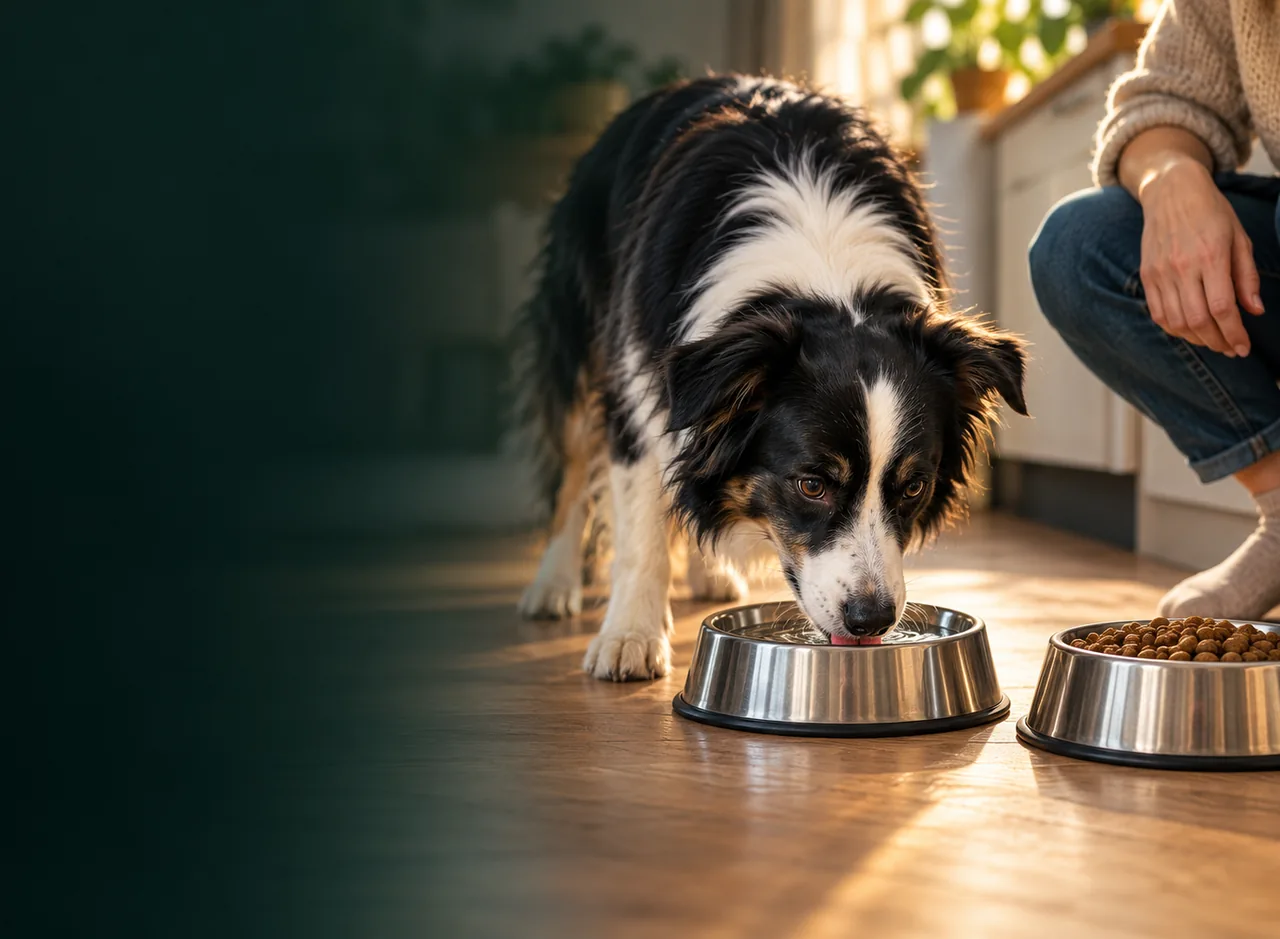
If your dog has stopped eating or is eating far less, go to your vet now, even if they are still drinking. We will not guess at why, because the PDSA says there are many things that can be behind it. Only your vet can tell them apart. Drinking can be its own separate change, and it is worth mentioning when you call.
What to note is the part you can do. How much your dog is drinking, when they last ate normally, and whether they are still interested in water but turning away from a bowl. Note the date and the time for each, so the pattern is clear rather than approximate.
Then follow the tiers above. If your dog has stopped eating or is eating far less than usual, go to your vet now, and call on the way. If they are eating a little less, call your vet the same day. If they go on to eat far less, or stop eating, go now, without waiting for the PDSA's outer limit of no food for more than 24 hours.
When should I worry if my dog is not eating?
Worry now if your dog has stopped eating, is eating far less than usual, or has any drop in eating along with any other sign such as vomiting, diarrhoea, low energy, difficulty breathing, collapse, or severe pain. The University of Sydney's vet hospital lists a lack of appetite among the signs of an emergency, so do not sit on it.
Call the same day if your dog is eating a little less or picking at food while otherwise bright, or if there is weight loss, a painful mouth or dribbling. If there is also vomiting, diarrhoea or low energy, go now.
The PDSA's own line is worth keeping in view: you know your dog best, and if you are still concerned it is always best to contact your vet.
Dog not eating and lethargic: go now
Two signs together are a reason to go now rather than wait. The University of Sydney's vet hospital lists a lack of appetite among the signs of an emergency, and the PDSA lists low energy among the signs to look out for.
Go to your vet or an emergency vet straight away, and call on the way. Describe when your dog last ate normally and when the low energy started, and mention anything else you have seen. Do not wait to see whether either one passes.
What to note for your vet
When something changes, these details help your vet see the whole picture:
- When they last ate normally, with the date and the time.
- How much they are drinking, and whether that has changed too.
- Toileting, in your own words.
- Energy and behaviour.
- Vomiting, or anything else that appeared.
- Anything new they might have eaten, or any change in routine.
You do not need to work out what any of it means. That is your vet's job. Your part is the noticing.
How My Furly helps you keep track
My Furly is a place to keep your dog's health story, so the details are there when you need them.
A dated entry as it happens. When something changes, add a dated entry to your dog's record. Symptoms sit on one timeline with vet visits, medicines and notes, so you can see when it started and whether it is changing.
Talk it through with Furly. Furly, the companion inside My Furly, knows your dog's own history. You can talk through what you have noticed, or ask how to put a question to your vet. Furly is not a vet, and is built to point you to one when it matters. It does not decide whether you should go, or how serious something is. You and your vet do.
A private link for your vet. When you choose to, you can create a private link with an access code and send it to your vet. They see your dog's timeline, vaccinations, weight and documents, so the conversation starts from the full picture. You stay in control, and you can replace the link at any time.
None of this replaces your vet, or a call to an emergency clinic. It means that when you do call, you have the answers to their first questions.
Frequently asked questions
Why is my dog not eating but drinking water?
If your dog has stopped eating or is eating far less, go to your vet now, even if they are still drinking. We will not guess at why, because the PDSA says there are many things that can be behind it. Only your vet can tell them apart. Note how much your dog is drinking, when they last ate normally, and whether anything else has changed, then call your vet.
When should I worry if my dog is not eating?
Worry now if your dog has stopped eating, is eating far less than usual, or has any drop in eating along with any other sign such as vomiting, diarrhoea, low energy, difficulty breathing, collapse, or severe pain. The University of Sydney's vet hospital lists a lack of appetite among the signs of an emergency. Call the same day if your dog is eating a little less or picking at food while otherwise bright.
Should I wait to see if my dog eats later?
No: if your dog has stopped eating or is eating far less, go now; if they are eating a little less while bright, call the same day. If they go on to eat far less, or stop eating, go now, without waiting for the PDSA's outer limit of no food for more than 24 hours. The PDSA says that when your dog's eating habits change it is often a sign of a problem, so call the same day at the latest.
My dog is not eating and is lethargic. What should I do?
Go to your vet or an emergency vet straight away, and call on the way. The University of Sydney's vet hospital lists a lack of appetite among the signs of an emergency, and the PDSA lists low energy among the signs to look out for. Two signs together are a reason to go now.
What should I tell my vet if my dog is not eating?
Go now if your dog has stopped eating, and tell your vet when your dog last ate normally, how much they are drinking, whether they are toileting and behaving normally, whether anything else appeared, and anything new they might have eaten.
Is it a problem if my dog eats a little less than usual?
The PDSA says appetites do vary between dogs, but that if your dog's eating habits have changed it is often a sign of a problem, so call the same day. If your dog is eating a little less than usual while otherwise bright, call your vet the same day. If they are barely eating or eating far less, go now: the University of Sydney's vet hospital lists a lack of appetite among the signs of an emergency.
Sources
- The University of Sydney (University Veterinary Teaching Hospital). Signs of an emergency and FAQs. www.sydney.edu.au/vet-hospital/emergency/signs-and-symptoms-faqs.html. Accessed 19 October 2026.
- PDSA. My dog isn't eating properly. Published November 2018. www.pdsa.org.uk/pet-help-and-advice/pet-health-hub/symptoms/my-dog-isn-t-eating-properly. Accessed 19 October 2026.
More on when to see a vet
For the full checklist of the signs that mean go now, call today, or note and watch, see When to take your dog to the vet: a calm checklist. For calmer ways to handle the worrying moments, see Never face the 3am worry about your pet alone.
Start keeping your dog's health history at myfurly.ai.
A gentle note
Furly helps you organise and understand your pet's history, and prepares you for the vet. It is not a diagnosis tool and does not replace professional care. If something worries you, or your dog stops eating, speak to a licensed vet or an emergency clinic straight away.