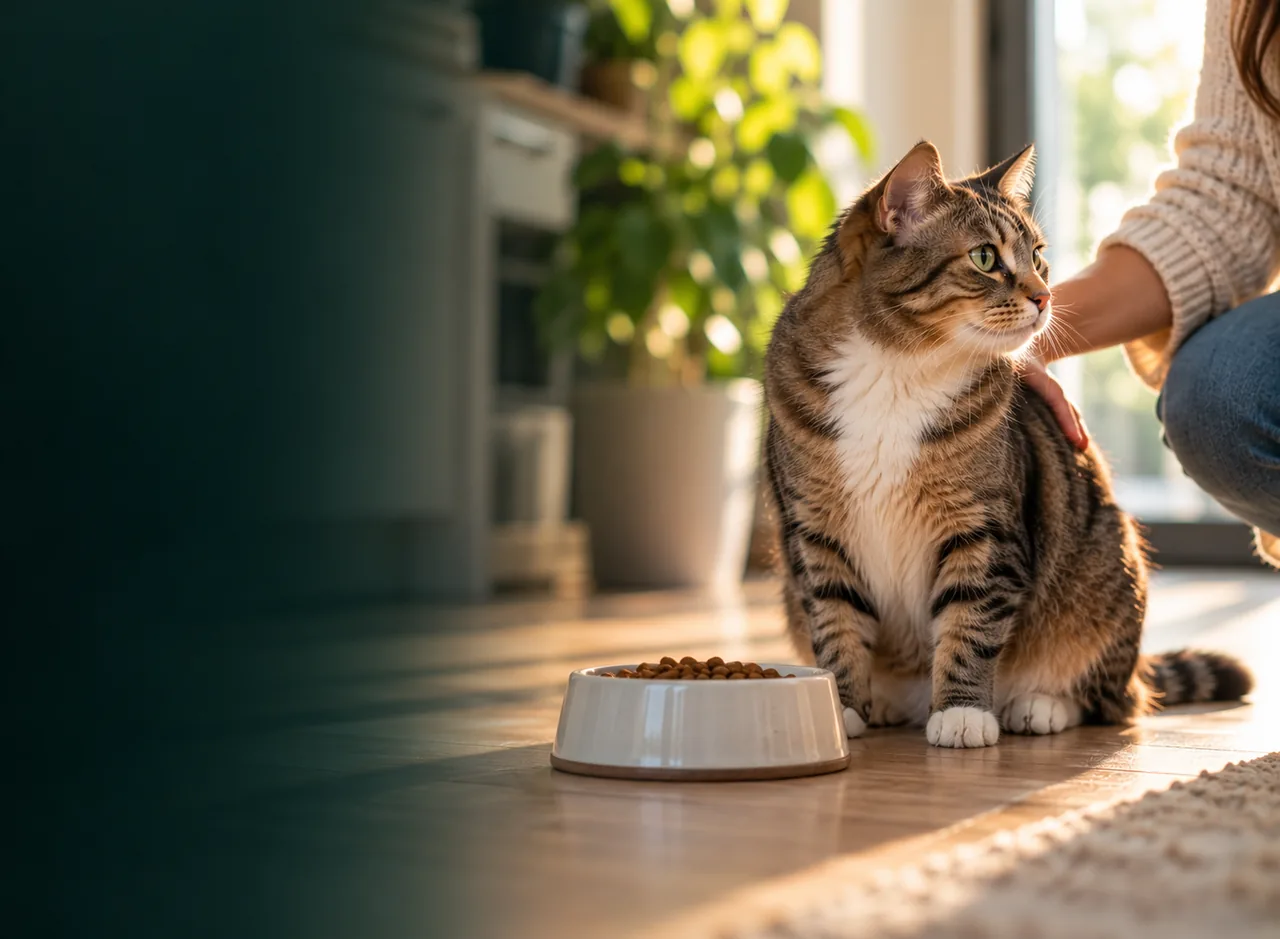
Cat vomiting after eating: what is common and when to see a vet
How often your cat vomits, and whether that is changing, is what matters. When to call your vet the same day, when to go now, and what to note for them.

Contents
- Signs that mean go to a vet now
- Signs that mean call your vet straight away
- When to note it and watch
- Why does my cat vomit after eating?
- When should I worry about my cat vomiting?
- What to note for your vet
- How My Furly helps you keep track
- Frequently asked questions
- Why does my cat vomit after eating?
- Is it common for a cat to vomit?
- When should I worry about my cat vomiting?
- When should I take my cat to the vet for vomiting?
- What should I tell my vet about my cat's vomiting?
- Should I be worried if my cat vomits once?
- Sources
- More on when to see a vet
- A gentle note
The PDSA notes that most cats vomit from time to time, but common is not the same as harmless: vomiting more than once, vomiting for more than 24 hours, or vomiting with other signs needs your vet. What matters is how often it happens, and whether that is changing, so keep a dated record.
Signs that mean go to a vet now
Go to your vet or an emergency vet straight away, and call on the way, if your cat has any of these.
- Vomiting that has gone on for more than 24 hours, or a cat who cannot keep food or water down. Go now. The PDSA says to contact your vet straight away in both cases.
- Persistent vomiting. Go now. The University of Sydney's vet hospital lists persistent vomiting or diarrhoea among the signs that need urgent care.
- Blood, or black dots, in the vomit. Go now. The PDSA lists this among the signs to contact your vet about straight away.
- A cat who stops eating, or eats far less than usual. Go now. The University of Sydney's vet hospital lists inappetence, which means a lack of appetite, among the signs of an emergency.
- Any drop in eating, even a little less, along with the vomiting, diarrhoea, low energy, or any other sign on the go-now or straight-away lists. Go now. The University of Sydney's vet hospital lists vomiting, diarrhoea and inappetence among the signs of an emergency, and says that if you are unsure, it is always safest to bring your pet in.
- Pale gums. Go now. The PDSA lists pale gums among the signs to contact your vet about straight away.
- Severe pain or distress. Go now. The University of Sydney's vet hospital lists this among the signs that need urgent care.
- Difficulty breathing, or collapse. Go now. The University of Sydney's vet hospital lists both as emergencies.
If you are unsure whether it is an emergency, the University of Sydney's vet hospital puts it simply: it is always safest to bring your pet in.
Signs that mean call your vet straight away
Call your vet straight away if your cat has any of these. Your vet can tell you whether to bring your cat in now.
- Low energy. The PDSA lists lethargy among the signs to contact your vet about straight away.
- A painful tummy. The PDSA lists a painful abdomen among the signs to contact your vet about straight away.
- Diarrhoea alongside the vomiting. The PDSA lists this among the signs to contact your vet about straight away.
- Drinking or peeing more than usual. The PDSA lists this among the signs to contact your vet about straight away.
- A cat who has eaten something they should not have. The PDSA lists this among the signs to contact your vet about straight away.
- A cat who is very young or very old, or otherwise unwell. The PDSA says to contact your vet straight away in these cases.
If your cat has vomited more than once but has none of these signs, call your vet for advice the same day. The PDSA says to call your vet for advice if your cat vomits more than once, seems unwell, or has any other symptoms.
Cornell University's feline health centre adds that a cat who vomits more frequently than once a week, or who shows other signs such as weakness, should be evaluated by a vet promptly. If your cat has been vomiting on and off over weeks, that is worth a visit, even if each episode looked small at the time.
The University of Sydney's vet hospital lists persistent vomiting or diarrhoea among the signs of an emergency. If any of these is severe or persistent, or comes with a sign from the go-now list, do not wait: go now. If you are not sure whether the vomiting counts as persistent, go now: the University of Sydney's vet hospital says that if you are unsure, it is always safest to bring your pet in.
When to note it and watch
The PDSA's view is that it is not always necessary to see your vet the first time your cat vomits, but it says to monitor them closely, and to call for advice if they vomit again, seem unwell, or have any other symptoms.
Watching is not the same as waiting it out. It means writing down what you saw and when, so that you can describe the pattern rather than guess at it. If your gut says something is wrong, call.
This is the part memory handles badly: after a few weeks, the honest answer to "how often, exactly?" is usually a shrug. A date and a line for each episode turn that into something your vet can use.
Why does my cat vomit after eating?
Only your vet can tell why, because vomiting can be a symptom of many different conditions, some mild and some serious. What we can do is note the pattern and know when to call.
A few details are worth writing down: how soon after eating it happens, how often, what it looks like, and whether your cat is eating and drinking normally in between. Vomiting that happens close to a meal, now and then, reads differently from vomiting that is becoming more frequent, and that change is what your vet is likely to ask about.
When should I worry about my cat vomiting?
Worry when the vomiting is persistent or severe, when it has gone on for more than 24 hours, when your cat cannot keep food or water down, when there is blood or black dots in the vomit, or when your cat stops eating: go now for any of these.
Call your vet the same day if it has happened more than once, and straight away if there is low energy, diarrhoea, a painful tummy, a change in drinking or peeing, or a cat who is very young or very old, or otherwise unwell.
And watch the slow version too. Cornell University's feline health centre says a cat who vomits more frequently than once per week, or who shows other signs such as weakness, should be evaluated by a vet promptly. Any drop in eating along with the vomiting, diarrhoea or low energy is a reason to go now. Vomiting that creeps up over a month is easy to rationalise one episode at a time, which is exactly why a written record helps.
What to note for your vet
When something changes, these details help your vet see the whole picture:
- What you saw, and when it started, with the date and time.
- How often it is happening, rather than a general sense that it is frequent.
- Whether it was close to a meal.
- What came up, and its colour.
- Eating, drinking, toileting and energy, in your own words.
- Any medicines they take.
- A photo, if it helps show what you are seeing.
You do not need to work out what any of it means. That is your vet's job. Your part is the noticing.
How My Furly helps you keep track
My Furly is a place to keep your cat's health story, so the pattern is there when you need it.
A dated entry as it happens. When your cat vomits, add a dated entry to their record. Symptoms sit on one timeline with vet visits, medicines and notes, so you can see how often it has happened, and since when.
Keep the photo on the record. If you took a photo, keep it on your cat's record, alongside vet reports and documents.
Talk it through with Furly. Furly, the companion inside My Furly, knows your cat's own history. You can talk through what you have noticed, or ask how to put a question to your vet. Furly is not a vet, and is built to point you to one when it matters. It does not decide whether you should go, or how serious something is. You and your vet do.
A private link for your vet. When you choose to, you can create a private link with an access code and send it to your vet. They see your cat's timeline, vaccinations, weight and documents, so the conversation starts from the full picture. You stay in control, and you can replace the link at any time.
None of this replaces your vet, or a call to an emergency clinic. It means that when you do call, you have the answers to their first questions.
Frequently asked questions
Why does my cat vomit after eating?
We will not guess at why, because vomiting can be a symptom of many different conditions and only your vet can tell them apart. Note how soon after eating it happens, how often, and whether your cat is eating and drinking normally in between. Go now for persistent or severe vomiting, and call the same day if it happens more than once.
Is it common for a cat to vomit?
Cornell University's feline health centre says even the healthiest cat is apt to vomit now and then, and the PDSA says most cats vomit from time to time. Common is not the same as harmless. What matters is how often it happens, and whether that is changing.
When should I worry about my cat vomiting?
Worry when it is persistent or severe, when it has gone on for more than 24 hours, when your cat cannot keep food or water down, when there is blood or black dots in the vomit, or when your cat stops eating: go now for any of these. Call your vet the same day if it has happened more than once, and straight away if there is low energy, diarrhoea, a painful tummy, or a change in drinking or peeing.
When should I take my cat to the vet for vomiting?
Go straight away for any sign on the go-now list, such as vomiting for more than 24 hours, a cat who cannot keep food or water down, blood in the vomit, or a cat who stops eating. Call the same day if the vomiting has happened more than once. If it is coming back over weeks, that is worth a visit.
What should I tell my vet about my cat's vomiting?
Tell them what you saw and when it started, how often it is happening, and how your cat is eating, drinking, toileting and behaving. Mention any medicines they take.
Should I be worried if my cat vomits once?
The PDSA says it is not always necessary to see your vet the first time your cat vomits, but that you should monitor closely and call for advice if they vomit again, seem unwell, or have any other symptoms. Note what you saw and when, and call your vet the same day if they vomit again.
Sources
- The University of Sydney (University Veterinary Teaching Hospital). Signs of an emergency and FAQs. www.sydney.edu.au/vet-hospital/emergency/signs-and-symptoms-faqs.html. Accessed 19 October 2026.
- PDSA. Vomiting in cats. Published December 2020. www.pdsa.org.uk/pet-help-and-advice/pet-health-hub/symptoms/vomiting-in-cats. Accessed 19 October 2026.
- Cornell University College of Veterinary Medicine. Vomiting. Updated 2021. www.vet.cornell.edu/departments-centers-and-institutes/cornell-feline-health-center/health-information/feline-health-topics/vomiting. Accessed 19 October 2026.
More on when to see a vet
For the full checklist of the signs that mean go now, call today, or note and watch, see When to take your dog to the vet: a calm checklist. For calmer ways to handle the worrying moments, see Never face the 3am worry about your pet alone. For why your cat's own normal matters more than any general rule, see You know your pet best. Furly remembers the rest..
Start keeping your cat's health history at myfurly.ai.
A gentle note
Furly helps you organise and understand your pet's history, and prepares you for the vet. It is not a diagnosis tool and does not replace professional care. If something worries you, or your cat is vomiting, speak to a licensed vet.